Predictive Processing: How Your Brain Builds Reality Before It Arrives
 V. Zhao
Your brain is not a camera. It does not wait for the world to arrive and then report what it sees. Instead, it runs a continuous simulation of what should be happening next, then compares that simulation against incoming sensory data. When they match, you barely notice. When they don't, something jolts you, and that jolt is where learning lives.
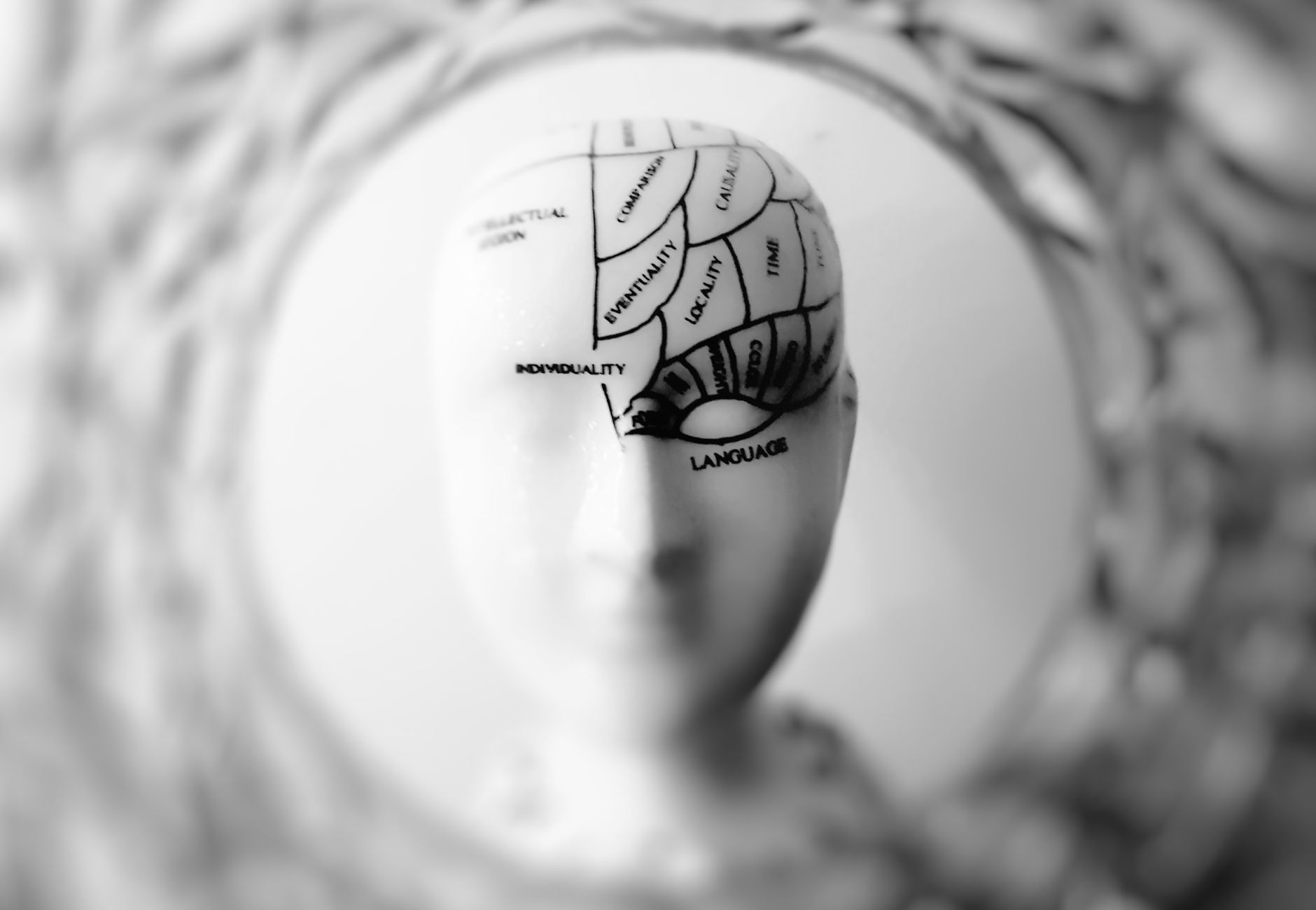 Photo by
 This is predictive processing in a single paragraph. But unpacking it changes how you think about comprehension, surprise, expertise, and why some things are so hard to unlearn.
The Brain as a Prediction Engine
Neuroscientist Karl Friston's formalization of predictive processing (sometimes called the "predictive coding" framework in perceptual neuroscience) describes the brain as a hierarchical prediction machine. Every level of your nervous system is constantly generating hypotheses about what inputs it will receive from the level below. When the prediction matches, the signal is suppressed, no news is good news. When there's a mismatch, a prediction error propagates upward, demanding attention and model revision.
Here's the counterintuitive part: what you consciously experience as "seeing" or "hearing" is largely the brain's prediction, not the raw sensory input. The sensory data is used to correct the prediction, not to generate your experience from scratch. You are, in a meaningful sense, living slightly in the future.
This is why optical illusions are so stubborn. Even after you know the two shades are identical, the illusion persists. Your high-level knowledge cannot override the prediction your visual cortex has already committed to. The brain's hierarchy is not fully transparent to itself.
What Prediction Errors Actually Do
Prediction errors are the engine of learning. When reality violates your model, your brain faces a choice: update the model, or decide the sensory signal was noise.
graph TD
    A[Generate Prediction] --> B{Prediction Error?}
    B -->|No| A
    B -->|Yes| C[Evaluate Error Significance]
    C --> D[Update Internal Model]
    C --> E[Dismiss as Noise]
    D --> A
    E --> A
Which path the brain takes depends on precision weighting: how much credibility the brain assigns to that sensory channel in this context. In a noisy environment, the brain down-weights incoming signals and trusts its own predictions more heavily. In a high-stakes, clear context, it up-weights sensory input and revises the model more aggressively.
For learners, this has a direct implication. Exposure to new information does not automatically trigger model revision. The brain has to trust the incoming signal enough to act on it. If you already have a confident model of how something works, your prediction errors may be dismissed rather than integrated. Expertise protects you from noise; it also insulates you from legitimate corrections. The experts-make-terrible-teachers problem has a predictive processing analog: the expert's brain suppresses prediction errors that a novice's brain would find alarming.
Why Surprise Is Pedagogically Valuable
Productive failure, desirable difficulties, contrastive cases, many of the most effective learning interventions share a common mechanism: they manufacture prediction errors. They force your existing model to misfire, loudly enough that the brain can't dismiss the signal as noise.
A student who reads a worked solution immediately never generates a prediction to violate. No surprise, no error, no revision pressure. The same student who struggles with a problem first has already committed to predictions about how it might work. When the correct solution deviates from those predictions, the mismatch is impossible to ignore.
This is why telling someone the answer early often backfires. You eliminate the error signal before the model even forms. The information arrives, but nothing in the brain demands integration.
The Double-Edged Nature of Fluent Models
Highly trained predictive models are efficient. An experienced programmer reading unfamiliar code generates accurate predictions about what the next line will do, which is why they read it faster than a novice. But that same efficiency produces a bias toward confirming what they already expect.
When the code does something unusual, a novice might stop and think: "Wait, that's strange." An expert might read past the anomaly entirely, their prediction so dominant it overwrites the signal. This is not a failure of intelligence. It is the system working exactly as designed. Speed and surprise-resistance are the same property.
Understanding this makes it easier to diagnose stalled learning. When you stop being surprised by a subject, you have two possible situations: you genuinely understand it deeply, or your predictive model has grown confident enough to suppress the errors that would push you further. Calibrating that distinction requires active effort, usually through testing yourself under conditions that penalize overconfident predictions.
Using Predictive Processing Deliberately
A few concrete applications follow from this:
Generate predictions before consuming content. Before reading a chapter, watching a lecture, or reviewing a solution, commit to an expectation. Even a vague one. You are priming your brain to register mismatches rather than passively absorb.
Seek genuine surprises, not just novelty. Novelty without violated expectations produces weak learning signals. The goal is to find information that contradicts something you currently believe, not merely information you haven't seen before.
Slow down when nothing surprises you. Fluency without error signals can mean mastery. It can also mean your model has calcified. The safest test is to make predictions explicit, then check them against reality rather than relying on the feeling that everything makes sense.
Your brain is always building the world before it arrives. The learner's job is to make sure those pre-built worlds are worth arriving in.
Get Grok Guide in your inbox
New posts delivered directly. No spam.
No spam. Unsubscribe anytime.