Dual Coding Theory: Why Combining Words and Images Builds Stronger Memory
 V. Zhao
Picture a diagram of the water cycle. Now read a paragraph describing evaporation, condensation, and precipitation. Each one teaches you something. Study both together, and something qualitatively different happens in your brain.
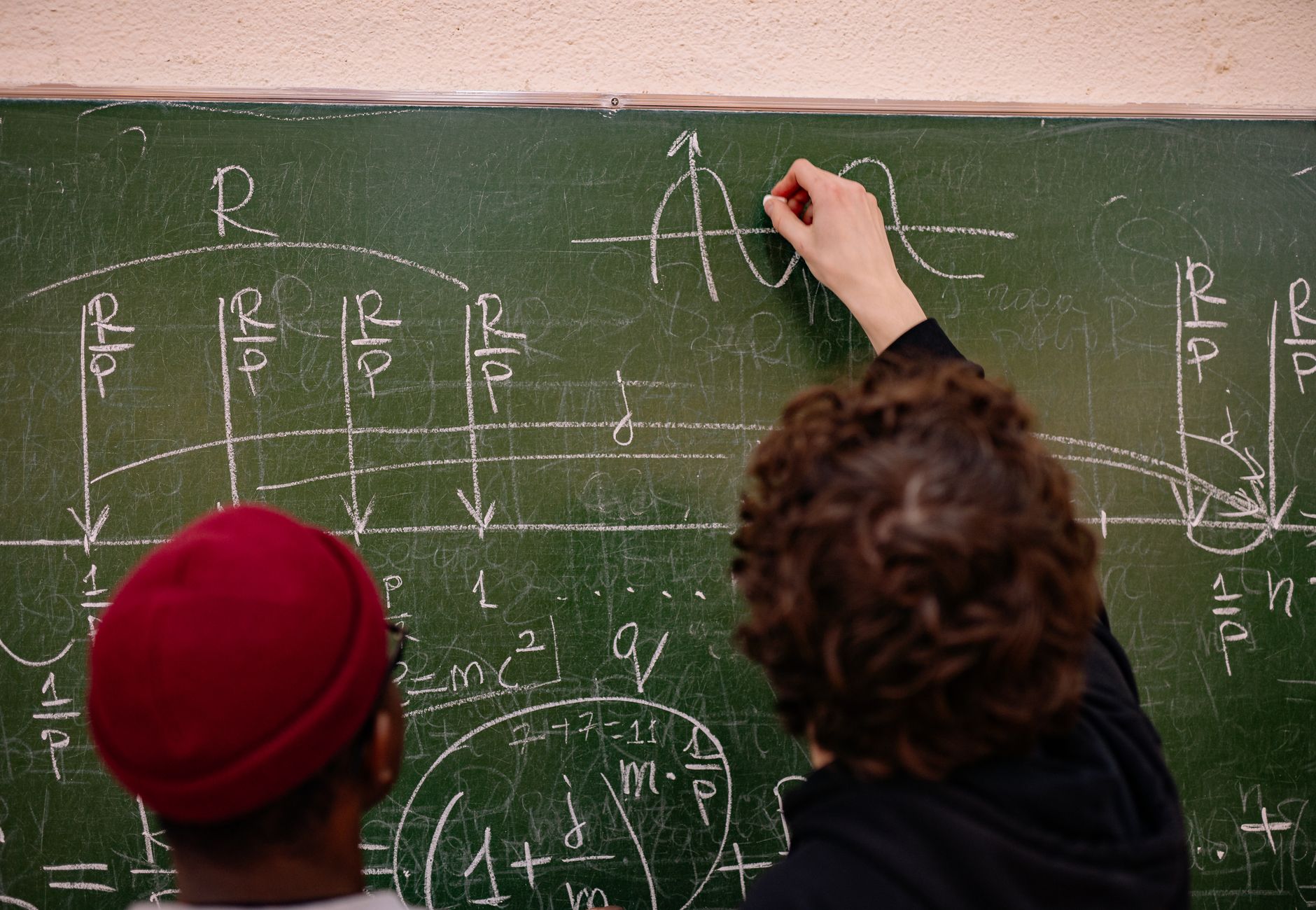 Photo by Yan Krukau on Pexels.
That observation sits at the heart of dual coding theory, developed by psychologist Allan Paivio in the late 1960s and early 1970s. His argument was specific: human cognition runs on two distinct symbolic systems. One handles verbal information, language, text, spoken words. The other handles nonverbal information, images, spatial relationships, mental pictures. These systems can operate independently, but when they activate together around the same concept, the memory trace you build is significantly stronger.
Two Systems, Not One
Paivio's key insight was that these channels are not redundant. They encode information in different formats and store it in different ways. A word like "bicycle" activates your verbal system. But it also tends to activate a mental image of a bicycle, engaging your nonverbal system simultaneously. Concrete nouns do this almost automatically. Abstract concepts like "justice" or "entropy" stay mostly verbal, which is part of why they're harder to remember without deliberate effort.
When both systems encode something, you end up with two retrieval pathways instead of one. If the verbal trace fades or gets blocked, the visual one can still surface the memory. This is why drawing a diagram while explaining a concept out loud so often produces better retention than either activity alone.
graph TD
    A[New Information] --> B(Verbal Channel)
    A --> C(Visual Channel)
    B --> D[Verbal Memory Trace]
    C --> E[Visual Memory Trace]
    D --> F{Dual-Coded Memory}
    E --> F
Where This Shows Up in Practice
Consider how you learned the solar system as a kid. Reading "Mars is the fourth planet from the Sun" gives you one encoding. Seeing a diagram with the planets laid out in order gives you another. Most people remember both the fact and the rough visual layout. The visual anchor does real work; years later, you might reconstruct the fact by mentally "scanning" toward the outer planets.
This matters a lot for technical learning. A written explanation of how a binary search tree works is genuinely harder to retain than that same explanation paired with a step-by-step visual showing nodes being inserted. The code still needs to be understood, but the visual representation gives your nonverbal system something to hold onto while your verbal system processes the logic.
It also explains why annotated diagrams outperform plain diagrams. A visual with no labels only engages one channel. Add precise, well-placed text and both channels activate together, which is exactly what Paivio's model predicts you want.
The Contiguity Principle
Researcher Richard Mayer extended Paivio's work into educational settings and identified something important: the timing and placement of words relative to images matters. His contiguity principle holds that words and images should appear near each other, in both space and time. A caption directly beneath a figure works better than a separate paragraph on the next page describing that same figure.
When they're separated, your working memory has to hold one while searching for the other. That gap costs you. Bring them together, and the dual encoding happens efficiently.
A Practical Implication You Can Use Today
When you're learning something dense, try this: write a clear verbal summary of the concept, then draw a rough visual that represents the same idea without looking at the text. It doesn't need to be polished. Boxes, arrows, spatial arrangements, anything that captures relationships.
Then compare the two. Where they diverge is usually where your understanding has a hole. Where they reinforce each other, you've built a genuinely dual-coded memory with two retrieval routes instead of one.
This is why the best textbooks, the ones serious learners return to, tend to integrate figures and prose tightly rather than treating visuals as decorative afterthoughts. Good diagrams earn their page space by encoding something the text cannot do as efficiently on its own.
Paivio's theory is now over fifty years old and has held up under substantial empirical scrutiny. The practical takeaway remains clean: your brain has more than one way to store what you learn. Using both channels deliberately isn't a study trick. It's working with how your memory actually functions.
Get Grok Guide in your inbox
New posts delivered directly. No spam.
No spam. Unsubscribe anytime.