Schema Theory: How Your Brain Uses Old Knowledge to Build New Understanding
 V. Zhao
Every time you read something new and feel it "click," you're not just receiving information. You're hooking it onto a structure that already exists in your head. That structure has a name: a schema.
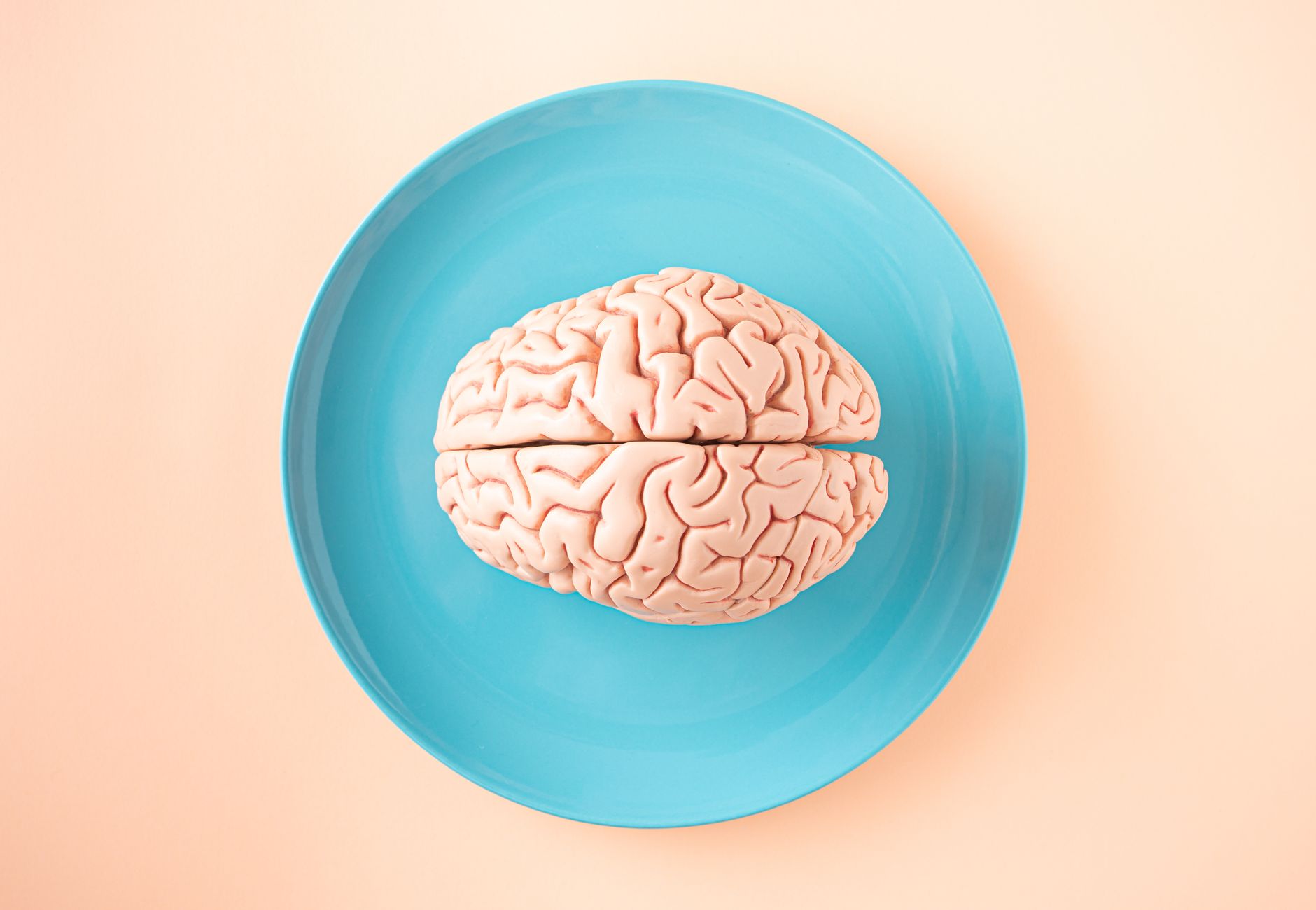 Photo by Amel Uzunovic on Pexels.
Schema theory has been around since psychologist Frederic Bartlett described it in the 1930s, and it was formalized further by cognitive scientist David Rumelhart in the 1970s. The core observation is straightforward: your brain doesn't store facts the way a hard drive stores files. Knowledge gets organized into interconnected clusters of related concepts, expectations, and relationships. Those clusters are schemas.
When you encounter something new, your brain immediately searches for an existing schema to attach it to. Find one, and learning accelerates. Find none, and you're left with isolated, fragile information that fades quickly.
Why Schema Depth Predicts Learning Speed
This isn't a metaphor. Researchers have measured it directly.
In a famous 1978 study by William Chase and Herbert Simon, chess masters and novice players were shown board positions for a few seconds, then asked to reconstruct them. Masters recalled the positions with striking accuracy. Novices remembered almost nothing. But here's the revealing part: when the pieces were arranged randomly (not in any position that could occur in a real game), the masters' advantage nearly disappeared.
The masters weren't blessed with better general memory. They had deeply elaborated schemas for meaningful chess positions. Random boards matched no schema, so they were just as lost as the beginners.
This pattern repeats across domains. Physics experts classify problems by underlying principle (conservation of energy, Newton's second law) while novices classify by surface features ("this one has a pulley"). Medical diagnosticians with rich schemas notice symptom clusters that beginners see as unrelated details. The expert isn't smarter in some global sense. The expert has better-organized prior knowledge to absorb new information into.
The Three Ways Schemas Grow
Schemas don't just accumulate passively. Cognitive researchers describe three specific processes by which they develop:
graph TD
    A[Encounter New Information] --> B{Does a schema match?}
    B -- Yes, mostly --> C(Assimilation: fit new info into existing schema)
    B -- Partial match --> D(Accommodation: revise schema to fit new info)
    B -- No match --> E[Tuning: build sub-schema or new connection over time]
    C --> F((Strengthened Schema))
    D --> F
    E --> F
Assimilation happens when new information fits your existing schema well enough. You read about a new programming language with similar syntax to one you know, and most of the concepts map over. Learning is fast because assimilation requires minimal restructuring.
Accommodation is more demanding. Your schema partially fits but the new information reveals a contradiction or gap. You have to revise your existing understanding to incorporate it. This feels harder, and it is. But the resulting schema is more accurate and more flexible.
Tuning is the slow, incremental refinement that happens across many encounters over time. It's why experts keep getting better even after they've "learned" a domain. Each exposure sharpens the schema without replacing it wholesale.
Notice that the Productive Failure literature maps directly onto accommodation: letting learners struggle before instruction forces them to activate and expose gaps in existing schemas, which makes the subsequent instruction easier to integrate.
How to Use This Deliberately
Knowing about schemas isn't enough. Applying it requires concrete habit changes.
Activate before you read. Before picking up a new chapter or article, spend two minutes recalling what you already know about the topic. This primes the relevant schema and gives new information somewhere to land. It sounds almost too simple. It works.
Find the violated expectation. When something surprises you or contradicts what you expected, that's accommodation happening. Lean into it. Ask: what did I expect, why, and what does the actual answer reveal about where my schema was wrong? That question encodes the correction more durably than passive re-reading ever will.
Build bridges explicitly. When learning in a new domain, identify the closest schema you already have and map the analogy deliberately. Learning database indexing? Your schema for a book's index does most of the work. Learning Bayesian updating? Your schema for changing your mind based on evidence is the anchor.
Schemas are also why onboarding someone to a complex system is so uneven in practice. A new hire with relevant domain schemas absorbs context at three times the rate of someone without them, regardless of raw intelligence. Building the schemas is the real work of early-stage learning, and it's invisible to people who mistake rapid surface fluency for understanding.
What you already know shapes what you can learn next. Work with that, not against it.
Get Grok Guide in your inbox
New posts delivered directly. No spam.
No spam. Unsubscribe anytime.