Productive Failure: Why Struggling Before Instruction Leads to Deeper Learning
 V. Zhao
Most education is built on a sensible-sounding assumption: explain first, then practice. Give students the method, then let them apply it. It feels efficient. It minimizes frustration. And according to decades of research by Manu Kapur and others, it may be quietly undermining deep understanding.
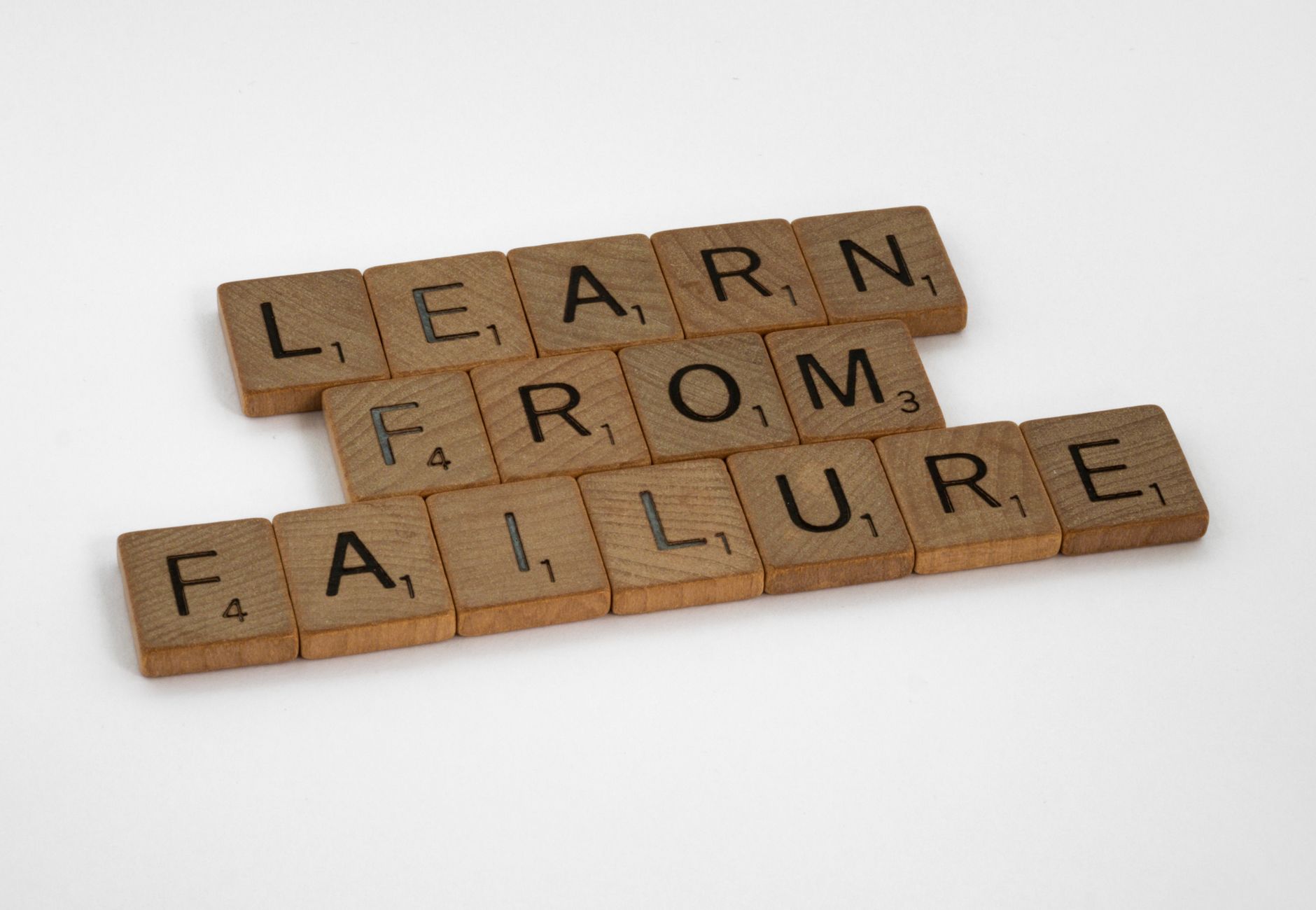 Photo by Brett Jordan on Pexels.
The concept is called productive failure. The idea is disarmingly simple, have learners attempt to solve a problem before they receive any instruction on how to solve it. They will almost certainly fail, or at least produce incomplete, messy solutions. That's not a bug. It's the point.
What Happens in the Brain When You Struggle First
When you try to solve a problem without the right tools, your mind starts searching. You activate prior knowledge, construct partial solutions, notice where your existing understanding breaks down. You generate hypotheses, most of them wrong.
This process does something crucial: it primes your cognitive system to receive the correct solution. When instruction finally arrives, you're not passively absorbing information. You're comparing it against the attempts you already made. You recognize why the canonical method works in a way you never would have if you'd been handed it upfront.
Kapur's studies, particularly with secondary school students learning statistics and physics, found a consistent pattern. Students taught through productive failure, struggle first, direct instruction second, outperformed students who received direct instruction first, even though the second group had more time on the correct procedure. They scored higher on transfer tasks. They showed better conceptual understanding. The initial struggle paid interest.
The Difference Between Productive and Unproductive Failure
Not all struggle is equal. Staring at a blank page for forty minutes and feeling hopeless doesn't produce the same outcome as genuinely attempting multiple approaches, hitting walls, and building a mental map of the problem space.
Productivity in failure requires two things:
- Exploration with effort, the learner must actually try to generate solutions, not give up after thirty seconds.
- Consolidation through instruction, the struggle must be followed by clear explanation that directly addresses the gaps the learner just experienced.
Without the first, you have passive learning. Without the second, you just have frustration. Together, they create what cognitive scientists sometimes call preparation for future learning, a state of heightened receptivity that makes subsequent instruction stick far better.
graph TD
    A[Problem Presented, No Instruction Yet] --> B(Learner Generates Attempts)
    B --> C{Solutions Correct?}
    C -->|Rarely| D[Gaps and Contradictions Become Visible]
    C -->|Occasionally| D
    D --> E[Targeted Direct Instruction]
    E --> F(Comparison: Learner's Attempts vs. Canonical Method)
    F --> G[Deeper Conceptual Understanding]
Why This Feels Wrong, and Why That Feeling Is the Problem
There's a reason this approach is underused. Struggle feels like failure. Students don't like it. Teachers don't like watching it. The dominant cultural script around education says that confusion is a sign something has gone wrong, that a good teacher prevents it.
But confusion, when it arises from genuine engagement with a problem, is a signal of learning in progress, not learning gone wrong. The discomfort is the cognitive work happening.
This connects to something worth naming directly: direct instruction is not the enemy here. Productive failure isn't an argument against teaching. It's an argument about sequencing. The same explanation lands differently depending on whether the learner has already wrestled with the problem it solves.
How to Apply This in Practice
You don't need a classroom to use this. If you're learning on your own, a new programming concept, a statistical method, a design pattern, try this sequence:
- Before reading the explanation, attempt to solve a representative problem from scratch. Write out your reasoning. Notice where you get stuck.
- Then read the canonical explanation or worked example.
- Afterward, explicitly compare. Where did your approach diverge? Why does the correct method handle what yours couldn't?
The comparison step is non-negotiable. It's where the learning actually lands.
One more thing worth saying: this is harder. It takes more time per concept than reading an explanation and doing a few practice problems. But the understanding you build is qualitatively different, transferable, durable, genuinely yours. That's the trade you're making. For anything you actually need to understand deeply, it's the right one.
Get Grok Guide in your inbox
New posts delivered directly. No spam.
No spam. Unsubscribe anytime.